
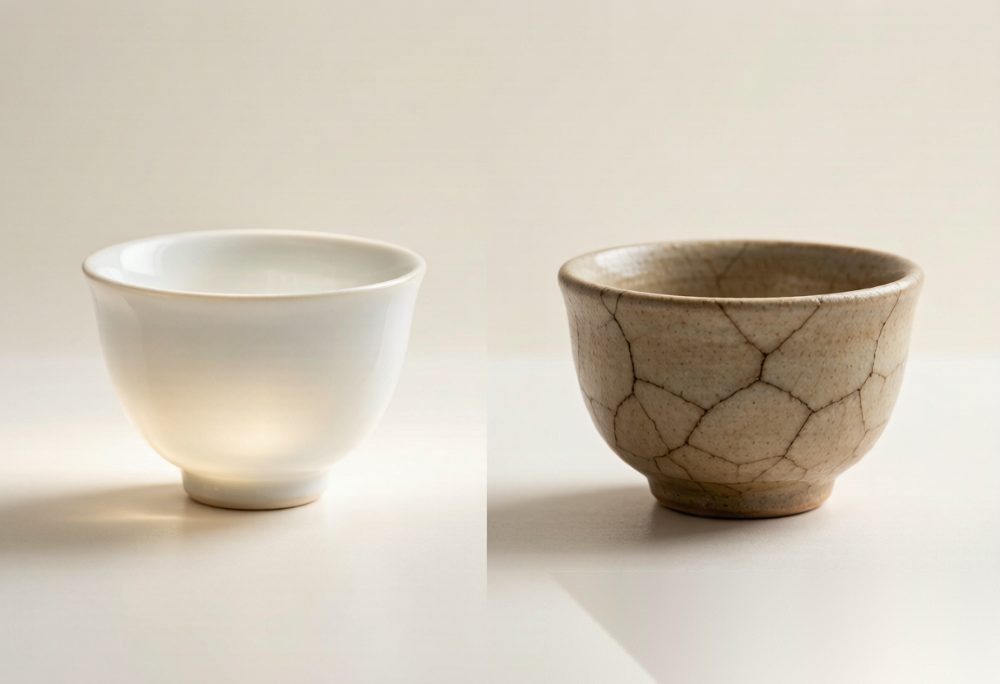
What Makes High-Temperature Porcelain Different
Authentic Jingdezhen porcelain is fired at temperatures exceeding 1,300°C (2,372°F). At this extreme heat, the kaolin clay undergoes a transformation that chemists call vitrification: it turns into a dense, glass-like, non-porous body. The result is a piece that is exceptionally durable, food-safe without any glaze at all, and—when thinly potted—semi-translucent. This is the category of porcelain that has defined Jingdezhen’s reputation for a thousand years. It does not absorb liquids, does not stain, and can comfortably withstand microwave and dishwasher use.
Understanding Low-Temperature Ceramics
Low-fire ceramics—typically fired between 700°C and 900°C (1,292°F to 1,652°F)—encompass earthenware, terracotta, and soft-paste porcelain. These materials retain significant porosity, meaning they absorb moisture and oils. They depend entirely on a surface glaze for functionality; once that glaze develops hairline cracks (which happens naturally over time), the porous body underneath begins to absorb liquids and harbor bacteria. Low-fire pieces are generally more affordable upfront but have substantially shorter lifespans—sometimes just a few years of regular use before the glaze crazes beyond repair.
How to Tell Them Apart
Three quick tests reveal the difference. Sound: tap the rim of a high-fire piece and you will hear a clear, sustained chime—like a crystal glass. Low-fire pieces ring dull and short. Weight: high-fire porcelain feels dense yet balanced; low-fire tends toward either lighter (from lower density) or heavier (from thicker walls to compensate for weakness). Translucency: hold a thin section up to a light source—high-fire porcelain glows; low-fire stays opaque. You can also check the foot rim: a high-fire piece will show a clean, vitreous unglazed base; a low-fire piece will look chalky and absorbent.
Why the Price Difference Matters
Low-fire ceramics can look deceptively similar at first glance, which is why they often command a fraction of the price. But the true cost reveals itself over time: crazed glazes, staining, chipping, and eventual replacement. A dinner set from Jingdezhen’s high-fire kilns, properly cared for, will outlast you and serve the next generation. It is not just a purchase—it is an heirloom in the making.
Always choose high-fire Jingdezhen porcelain. Contact us for wholesale inquiries and discover the difference that true craftsmanship makes.
Discover more from Zhejiang Ceramics (Jingdezhen)
Subscribe to get the latest posts sent to your email.