
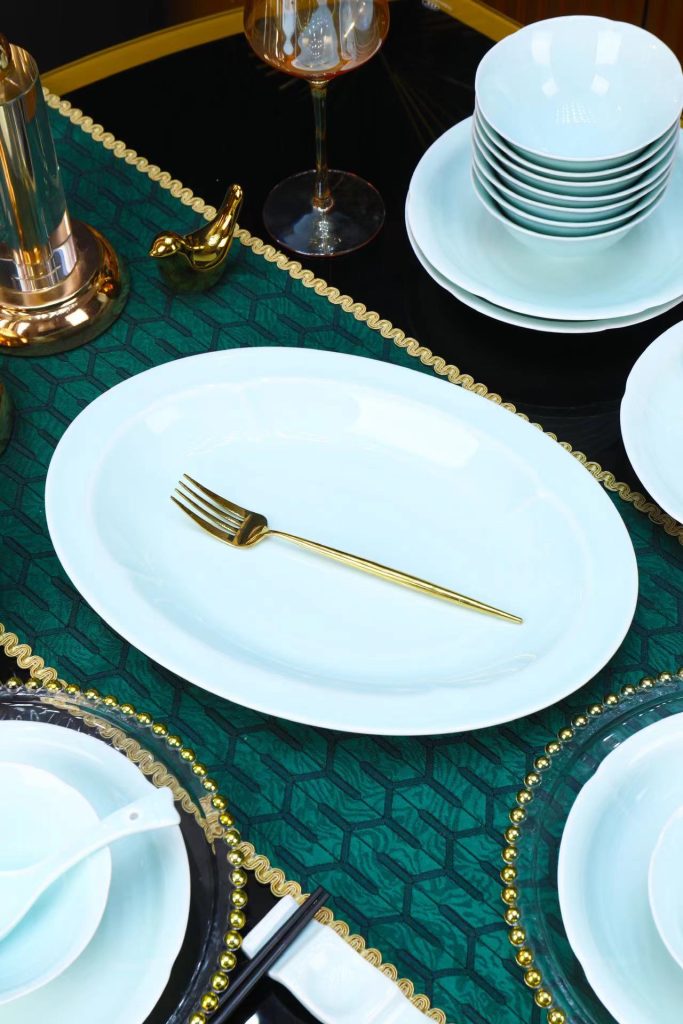
Choosing a ceramic tableware supplier is one of the highest-leverage decisions for a homeware or food-service brand. The right partner delivers consistent quality, reasonable minimums, and the customization that lets you build a recognizable line; the wrong one ships chipped stock and missed deadlines. This guide lays out what to evaluate, the configurations worth knowing, and how a Jingdezhen manufacturer fits a growing brand’s needs — with a 200-piece MOQ.
What to Look for in a Ceramic Tableware Supplier
- Production capability — can they fire at the temperatures needed for durable stoneware/porcelain, and hold glaze consistency across batches?
- MOQ flexibility — a 200-piece minimum lets a new brand launch without warehouse-scale risk.
- Customization — glaze, shape, logo, and packaging should all be adjustable.
- Quality control — documented inspection, food-safety compliance, and sample approval before mass runs.
- Communication — clear timelines and a single point of contact for reordering.
Why Jingdezhen Manufacturers
Jingdezhen has been the porcelain capital of China for over a millennium, which means a dense ecosystem of kilns, glaze specialists, and hand-painters within a small radius. That cluster is why even a small buyer can source celadon dinnerware sets or a custom teapot with credible craftsmanship and factory-direct pricing.
Comparing Dinnerware Configurations
Before you commit, understand the common set families so you can match inventory to your customer:
- Celadon dinnerware set (28/38/56-piece) — jade-green glaze, our most requested finish.
- White-glaze Linglong 58-piece set — clean, light, and versatile.
- Good Fortune Pomegranate 58-piece set — decorative motif for festive gifting.
- Blue-and-white Ruyi 58-piece set — classic patterned porcelain.
- Imperial Sunflower Rim 62-piece set — larger service count for entertainers.
- Hand-painted ceramic vase — extends the range into decor and gifting.
Mixing two or three of these lets you offer a tiered catalog — entry, mid, and premium — without sourcing from multiple factories.
MOQ & Flexibility for Growing Brands
A 200-piece MOQ per design is the sweet spot for testing a market: low enough to pilot a glaze or shape, high enough to keep unit economics sane. Many brands launch with one hero set, then add complementary pieces once sales confirm demand.
Customization & Quality Control
- Glaze & shape — adjust tone and silhouette to your brand.
- Branding — logo on the base and custom gift box.
- QC steps — pre-production sample, in-process check, and pre-shipment inspection against an agreed AQL.
Red Flags to Avoid
- Vague lead times with no sample stage.
- Refusal to share food-safety or material specs.
- MOQs so high they force you to overstock before proving demand.
- No clear reorder process for future batches.
How to Start with a Supplier
- Share your brief — target products, volumes, and brand direction.
- Request samples — evaluate weight, glaze, and finish in hand.
- Agree on specs & QC — document them before deposit.
- Scale gradually — start at MOQ, expand as sales confirm.
Frequently Asked Questions
What MOQ should I expect from a ceramic tableware supplier?
With our workshop the MOQ is 200 pieces per design — appropriate for launching a focused line without overstock.
Can one supplier handle both dinnerware and decor pieces?
Yes. A Jingdezhen manufacturer can produce dinnerware sets and complementary items like a hand-painted vase under one roof, simplifying logistics.
How do I verify quality before a big order?
Always approve a physical sample and agree on an inspection standard before mass production; this catches glaze and shape issues early.
Do you support private labeling?
Yes — logo on the base and custom packaging are available at the same 200-piece MOQ.
Ready to Evaluate a Supplier?
Send us your product shortlist and volume, and we will outline sampling, lead time, and pricing so you can compare with confidence.
Contact: WhatsApp +86 13576420360 · Email Jame@zhejiangceramics.com
Discover more from Zhejiang Ceramics (Jingdezhen)
Subscribe to get the latest posts sent to your email.